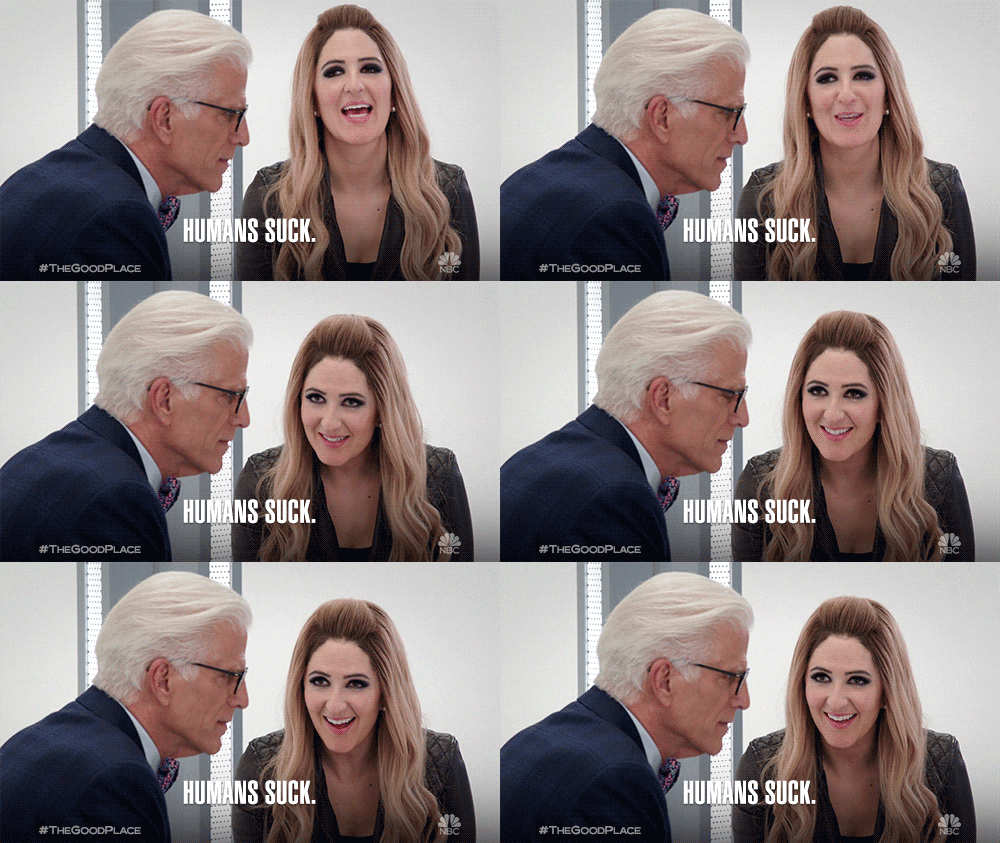
My first thought after reading the article by Rosanna Xia on DDT waste dumping in the Pacific Ocean?
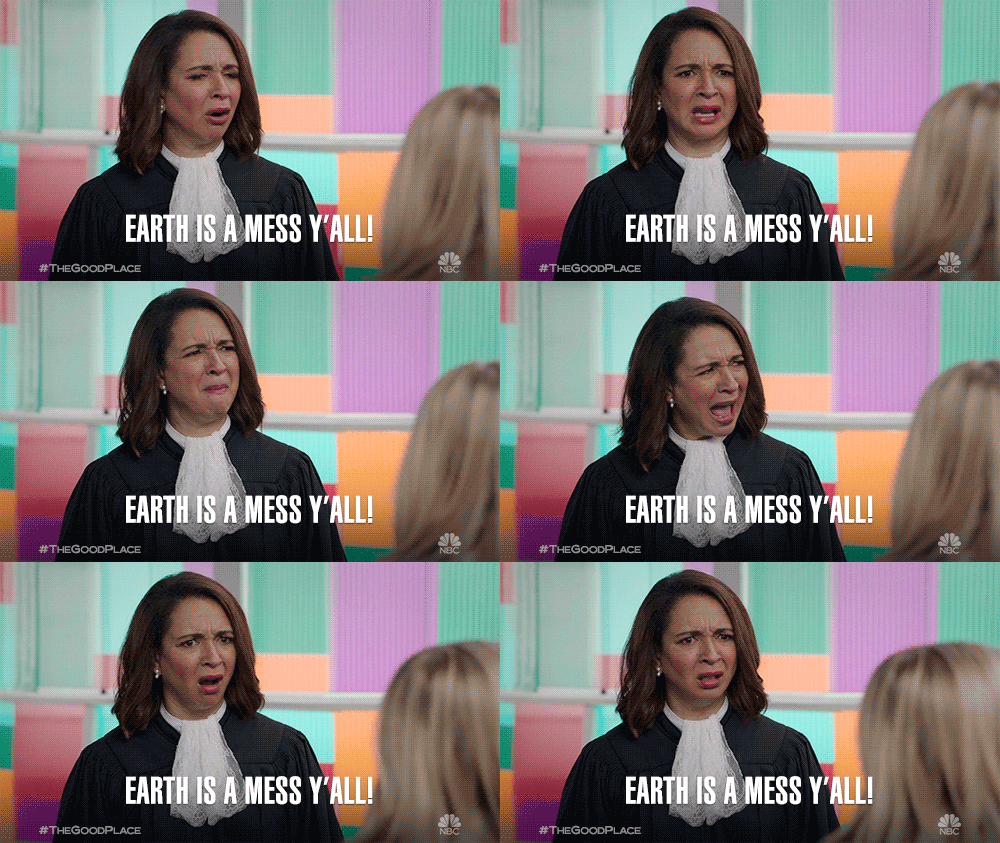
This whole week has been one long case of the Mondays. Thus, the title of the post. Also, I have a midterm for another course this week as well as lots of other things piling up, so this post might not be as in-depth as some others.
This article discussed the massive amounts of DDT acid waste dumped by Montrose (leading DDT producer in the US from 1947-1982) into the Pacific Ocean, out by Catalina Island. When it was first researched, DDT was referenced as a "miracle chemical", but even when there wasn't enough research in living systems, people put it everywhere anyway. There were drastic effects seen in many native species, some disappearing completely from areas they used to inhabit. It is thought, although nobody really knows, that there are at least somewhere in the range of 900-1500 tons that were dumped by Montrose during those years. Sometimes the barrels of chemicals were dumped outside of the designated dumping spot because of its location in a naval weapons firing range, among other reasons. Often these barrels were punctured so that they would sink.
The "Ocean Dumping Act", or the Marine Protection, Research, and Sanctuaries Act of 1972, was the first official piece of legislation where environmental impact was first considered. Before that, there were no real regulations in place. Researchers in the 1960s were looking into environmental impact of DDT and started pushing back against its use, but Montrose and other companies pushed back.
In the early 1980s, Allan Chartrand, a young scientist at the California Regional Water Quality Control Board in Los Angeles, started looking for answers about the deep-sea dumping. He contacted Montrose and started digging into a project that he says quickly became bigger than him. When the Environmental Protection Agency (EPA) got involved with a myriad of other officials and sued Montrose in 1990, the opposing claim was that the dumping wasn't relevant. They also argued against Chartrand's reports (the data from which came from Montrose) and the science was disputed. By late 2000, the parties settled for more than $140 million from Montrose and other companies, and local governments led by the LA county sanitation districts. This remains one of the largest settlements in the nation for an environmental damage claim, and was meant to pay for cleanup, habitat restoration, and education programs for people at risk of eating contaminated fish.
This wasn't the end of the investigation and the consequences of the waste dumping, however. Litigation continues though for the aftermath. It is thought that dumping affected all kinds of ocean and land wildlife, and it is also hypothesized that the acid sunk into and affected the seafloor. Unfortunately, some of the original researchers ran out of funding and were unable to continue research. Other suits have been filed based on various data, and in August 2020, a $56.6 million settlement was finally reached over groundwater contamination and other problems as a consequence of dumping acid into the environment. There is also ongoing research that suggests the barrels are continuing to leak over time.
Dr. Venkatesan (geochemist at UCLA who studied the chemicals moving through the ocean) also ran tests/analyses in the 1990s and reached conclusions that there were bigger issues, but public concern shifted to aerosols so her work shifted too. She states, "I didn't know what to do with this data; I felt bad. As scientists we thought we could leave it to the politicians and the government to do their job...But if the government is not proactive, then people don't care. If people don't care, then the government doesn't do anything". New deep-sea robots validated her early claims and research though, and she's hopeful that people will care again.
The EPA tried an experiment where they dumped a clean cap of sand onto the Palos Verdes shelf site, but reports are mixed and the EPA hasn't really been actively involved for several years. DDT keeps showing up in Southern California in new, different, and unexpected ways, and researchers don't really know where it's coming from. The real question now is, how much will the jobs and science of the future be dealing with messes created in the past?
The environment is a mess, thanks to people of the past and present taking advantage of (and excessively abusing) the natural resources that we have on Earth. These chemicals (and others!) are still an issue, but nobody seems to have a plan. This is where things get trickier moving forward--cleanup is expensive and complex, but if we don't do something, we won't have the resources we need to continue living life on this planet. It's important that we do something, but what? There are a whole slew of environmental issues, among them is climate change. I agree with Dr. Venkatesan and Dr. Seuss, that "unless someone like you cares a whole awful lot, nothing is going to get better, it's not".
Reference article:
Xia, R. (2020, October 25). How the waters off Catalina became a DDT dumping ground. Retrieved October 28, 2020, from https://www.latimes.com/projects/la-coast-ddt-dumping-ground/



No comments:
Post a Comment